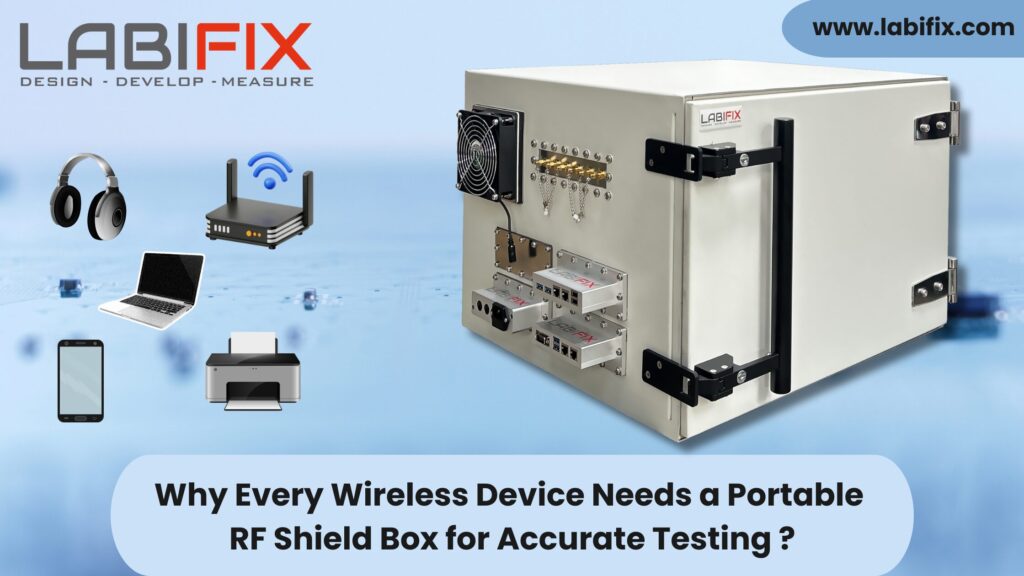
Why Every Wireless Device Needs a Portable RF Shield Box for Accurate Testing
Wireless technology now dominates consumer, industrial, automotive, and medical ecosystems. As devices become more sophisticated, the need for precise, interference-free testing has never been more critical. This is exactly where a portable RF shield box—also known as an RF shielded box, RF blocking box, Faraday box, or shielded test enclosure—becomes indispensable.
The Growing Challenge of RF Interference
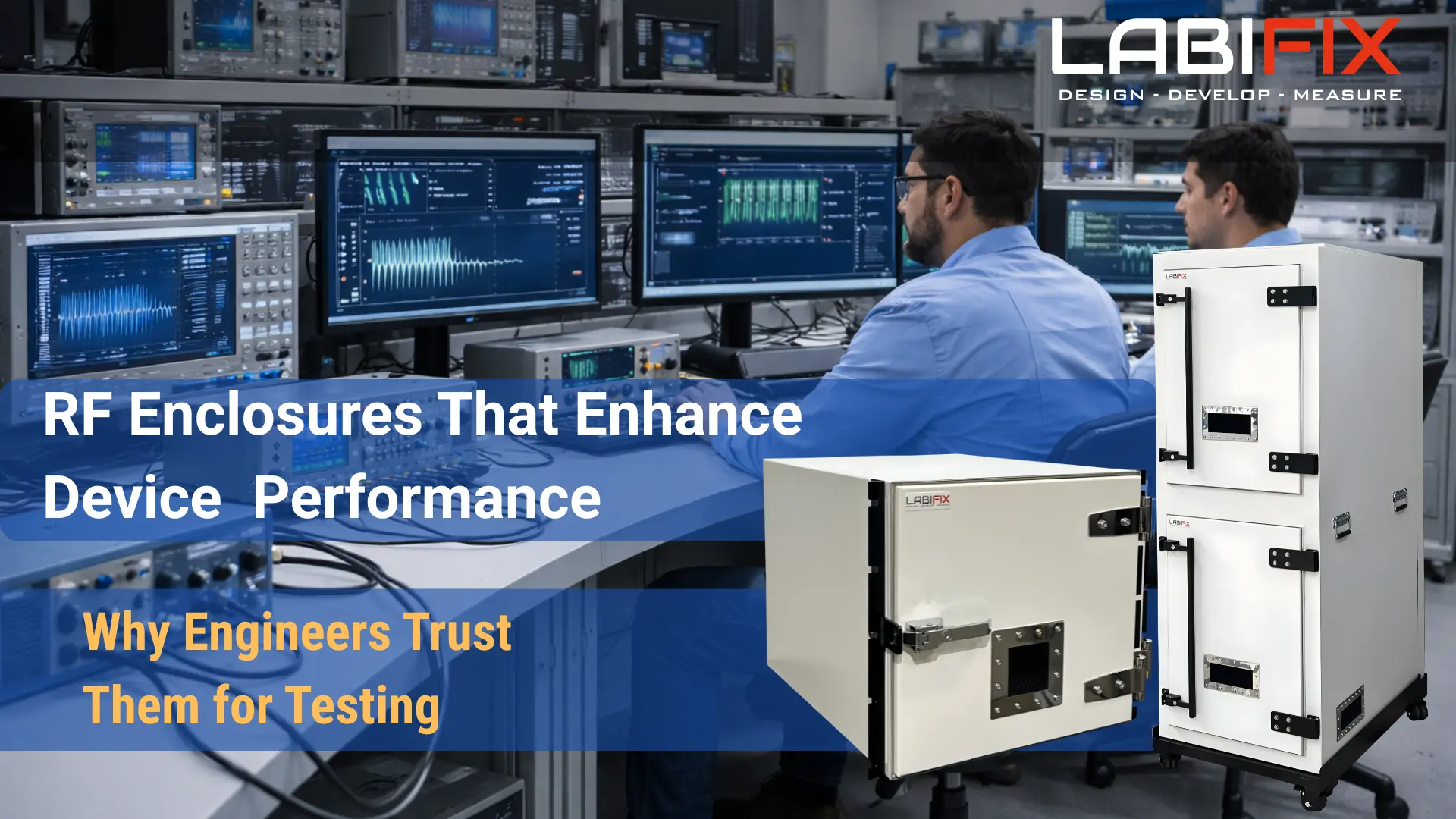
Modern labs are flooded with Wi-Fi routers, Bluetooth peripherals, 5G small cells, and uncontrolled RF emissions. This ambient noise corrupts measurements like sensitivity, throughput, latency, and antenna performance. Even micro-level interference can distort results and lead to product failures. A portable RF enclosure creates a controlled, isolated environment that eliminates external RF contamination—ensuring the device under test is measured accurately and consistently.
What Makes an RF Shield Box Essential?
A high-quality RF shielded enclosure system typically provides isolation levels of 80–120 dB across critical frequencies including Wi-Fi 6E, Bluetooth LE, GPS, 5G NR, and emerging IoT bands.
These boxes incorporate:
- RF absorbers to suppress internal reflections
- Filtered I/O ports for power, USB, Ethernet, and RF feedthroughs
- Robust shielding materials similar to a compact rf faraday cage
- Modular fixtures for phones, routers, IoT modules, V2X devices, and more
Unlike large RF chambers, EMC rooms, or anechoic test boxes, portable RF boxes are cost-efficient, compact, and ideal for bench-top, R&D, and production workflows.
Benefits of Using a Portable RF Shield Box
- Accurate & Repeatable Test Results: External noise from Wi-Fi, Bluetooth, and 5G networks is completely blocked, ensuring measurement purity.
- Reduced Certification Risk: Pre-compliance testing inside an RF shielded test box helps detect issues early—before expensive FCC/CE/ETSI certification stages.
- Cost-Effective Alternative to Large Chambers: A portable rf chamber box delivers exceptional isolation without the high anechoic chamber cost or maintenance of full-scale EMC rooms.
- Essential for Multi-Protocol Devices: Smartphones, IoT sensors, automotive ECU modules, Bluetooth wearables, and industrial wireless controllers all rely on precise RF validation.
Where RF Shield Boxes Are Used
Wherever there is wireless communication, a rf shielding box ensures integrity. Specific applications include:
- IoT & Smart Home Devices: Wi-Fi, Zigbee, Thread, BLE
- Consumer Electronics: Smartphones, tablets, wearables
- Automotive: V2X units, telematics, ADAS modules
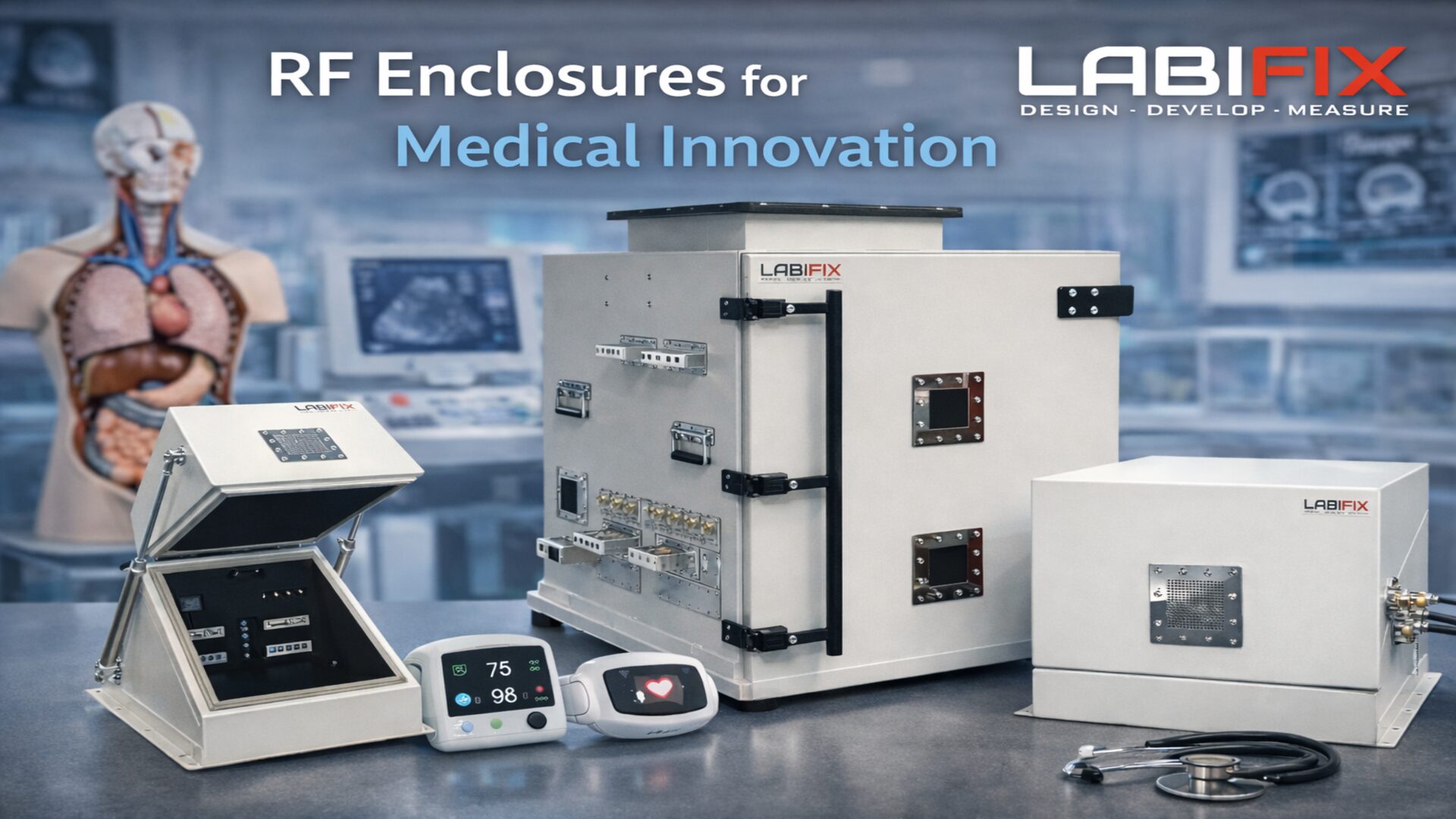
- Medical: Wireless monitoring, telemetry, implants
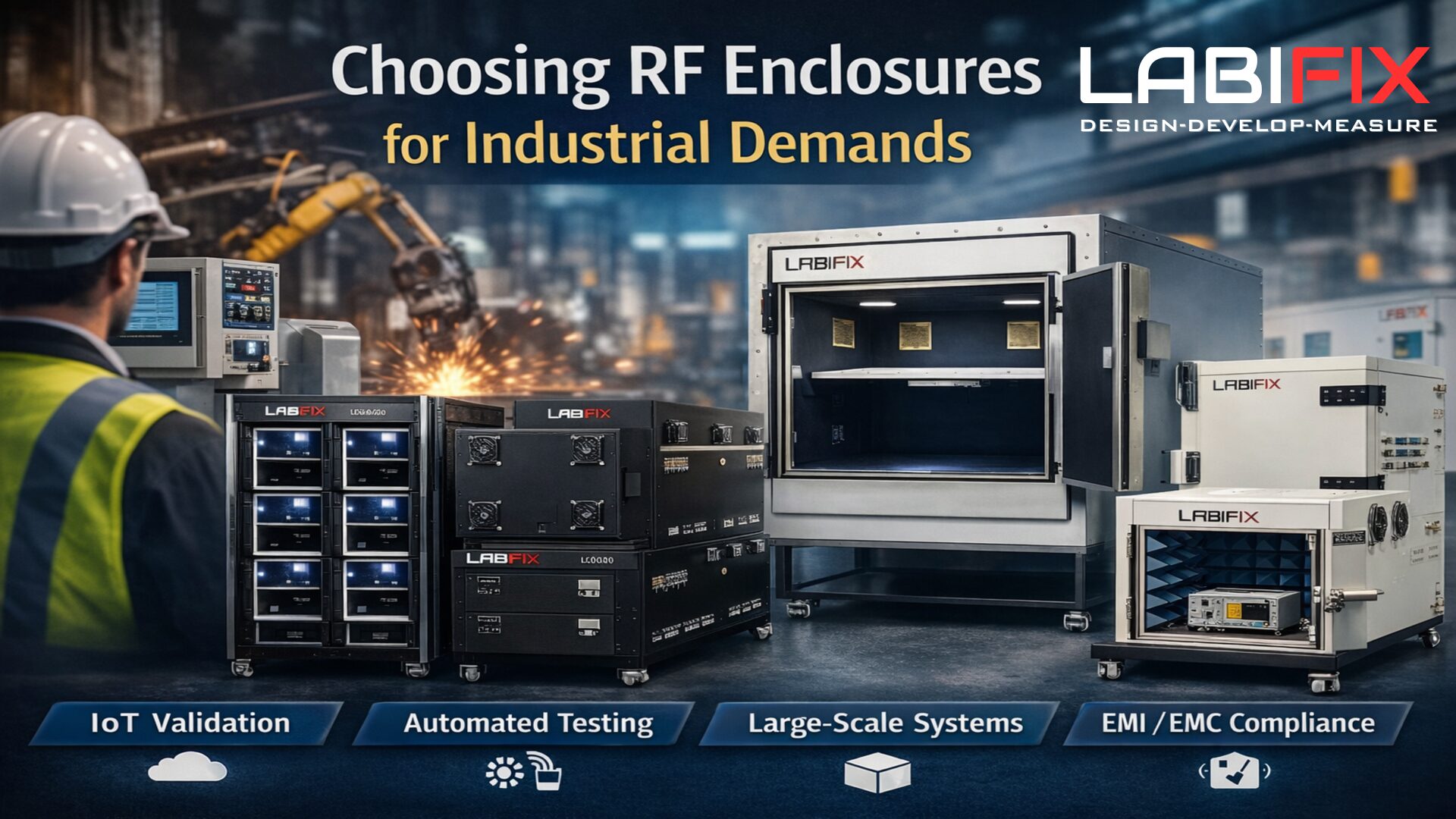
- Industrial RF: Robotics, automation, private 5G
Choosing the Right RF Shield Box
When selecting an RF test enclosure or rf isolation chamber, evaluate:
- Isolation level across operating bands
- Supported connectors (SMA, N-type, USB, Ethernet)
- DUT space and fixture flexibility
- Frequency coverage, especially for 5G and Wi-Fi 6E
- Build durability and shielding material quality
- Compatibility with automated test systems
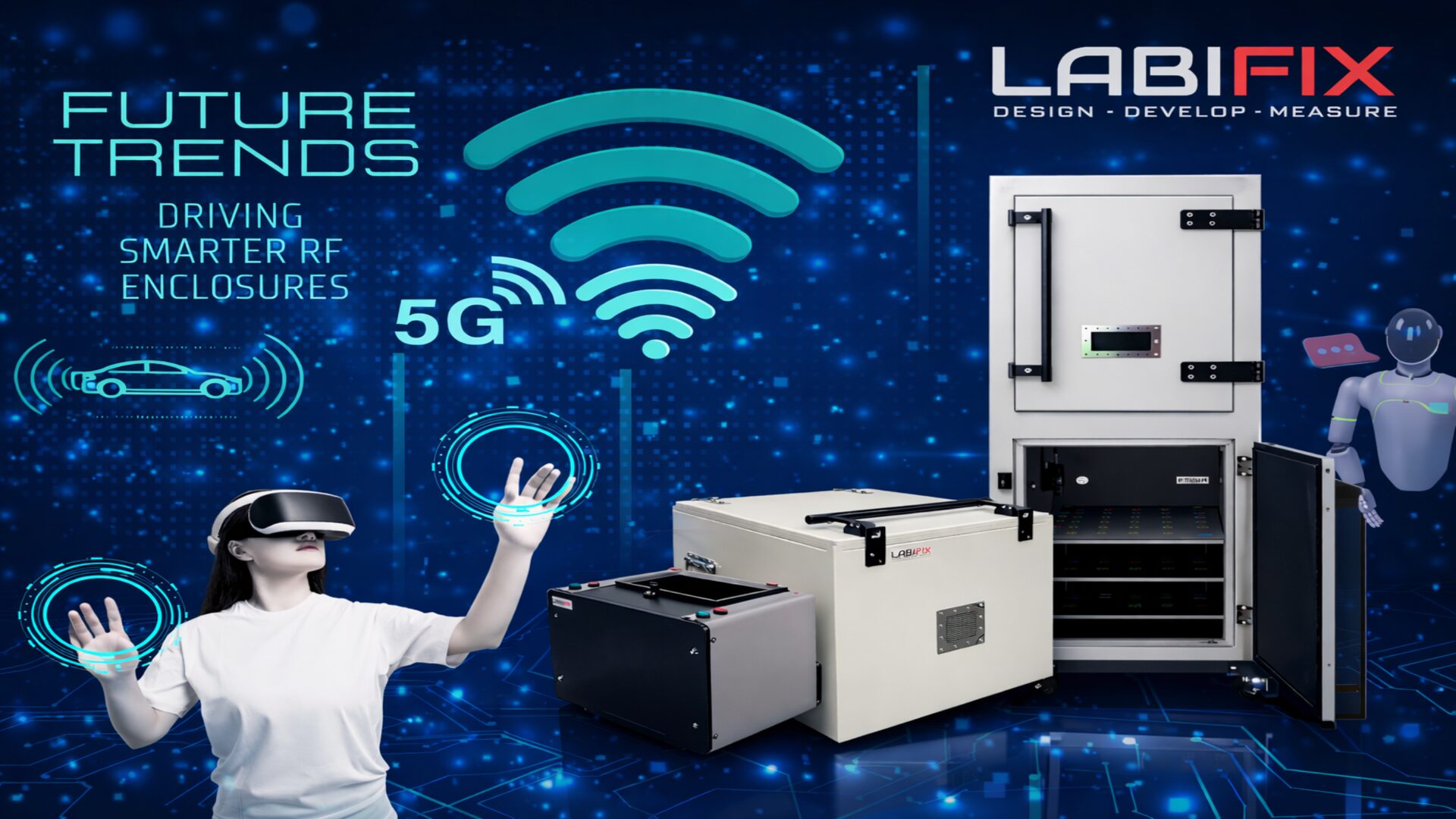
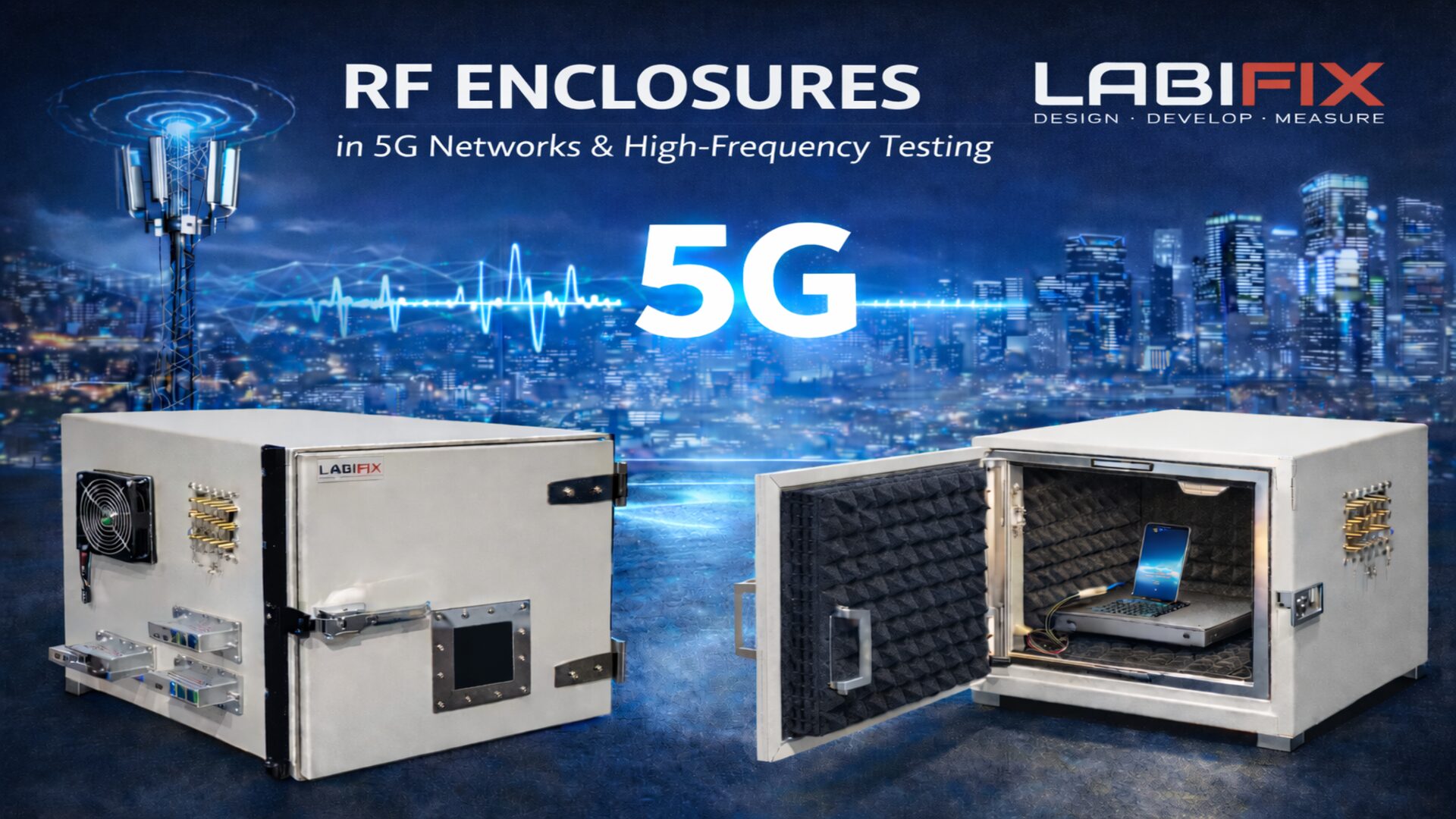
Future-ready designs also support 5G boxes, 6G testing, and UWB integrations.
FAQ - RF Shield Box
An RF Shield Box is a controlled, isolated enclosure that blocks external radio frequency (RF) noise and interference. It's essential because modern labs are flooded with ambient RF emissions (like Wi-Fi, 5G, and Bluetooth) that can corrupt critical measurements such as sensitivity, throughput, and antenna performance, leading to distorted results or product failures. Using an RF shield box ensures the device under test is measured accurately and consistently.
A high-quality RF shielded enclosure system generally provides high isolation levels, typically ranging from 80 to 120 dB. This isolation covers critical frequency bands, including Wi-Fi 6E, Bluetooth LE, GPS, 5G NR, and emerging IoT bands.
RF Shield Boxes are built with robust shielding materials, often resembling a compact RF Faraday cage. Key components include:
RF absorbers to suppress internal reflections.
Filtered I/O ports to safely introduce necessary connections like power, USB, Ethernet, and RF feedthroughs.
Modular fixtures to secure various devices under test (DUTs), such as smartphones, V2X units, or IoT modules.
Portable RF shield boxes are a cost-effective alternative to large RF chambers or EMC rooms. While both provide isolation, portable boxes are compact, ideal for bench-top R&D and production workflows, and deliver exceptional isolation without the high anechoic chamber cost or maintenance of full-scale rooms.
RF shield boxes are used across virtually every sector involving wireless communication. This includes:
Consumer Electronics (Smartphones, tablets, wearables).
IoT & Smart Home Devices (Wi-Fi, Zigbee, BLE).
Automotive (V2X units, ADAS modules).
Medical (Wireless monitoring, implants).
Industrial RF (Robotics, private 5G).