
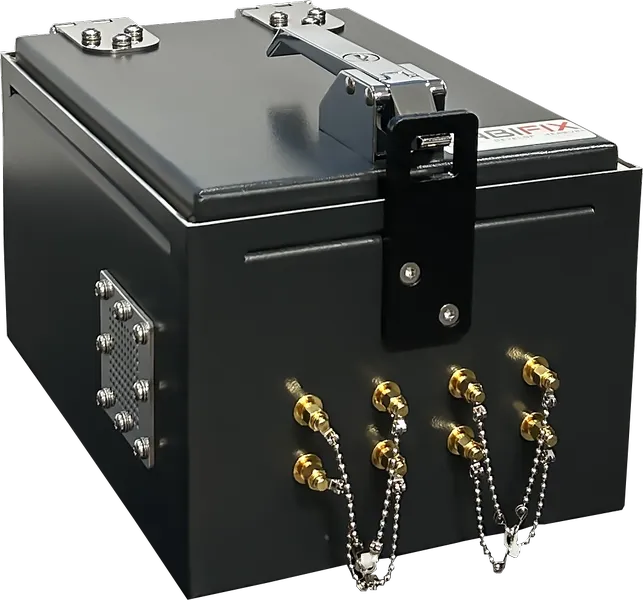
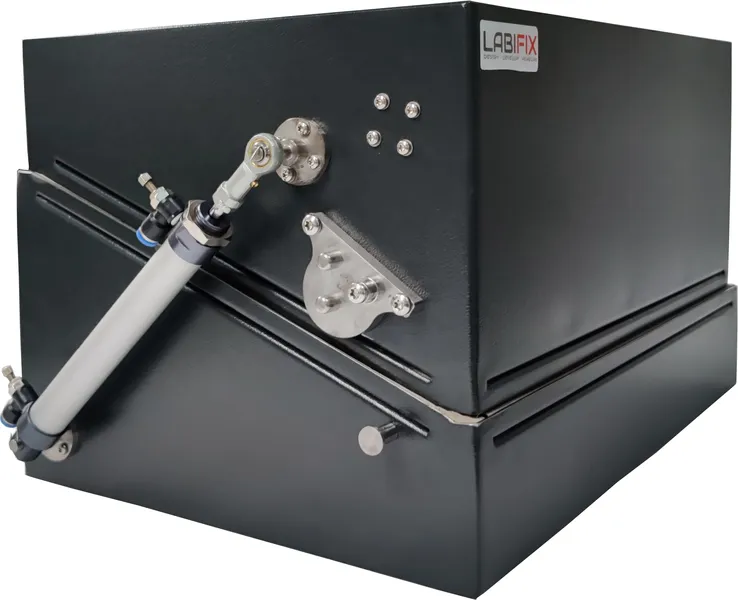
LBX0500
- Internal working space
- 4" (H) x 6" (W) x 9" (D)
- External dimensions
- 6" (H) x 8" (W) x 11" (D)
Shielding specifications
- 100 MHz - 1 GHz> 85 dB
- 1 GHz - 3 GHz> 95 dB
- 3 GHz - 6 GHz> 90 dB
- 6 GHz - 12 GHz> 85 dB
DESIGNED & MANUFACTURED IN BENGALURU, INDIA
LabiFix designs and manufactures RF shield boxes for wireless device testing. Choose portable, benchtop, rack-mount, standalone or pneumatic enclosures, with working space and filtered interfaces configured around your device and test setup.
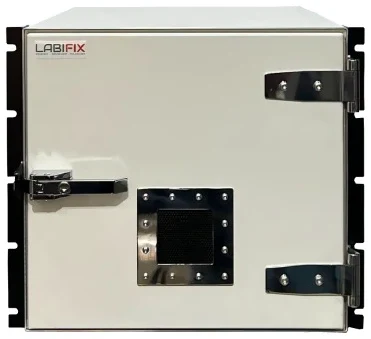
An RF shield box reduces unwanted coupling between a device under test and its surroundings. Match the enclosure format, frequency coverage, isolation and connections to the measurements you need to make.
Check device size, working space, weight and portability between test locations.
Explore this range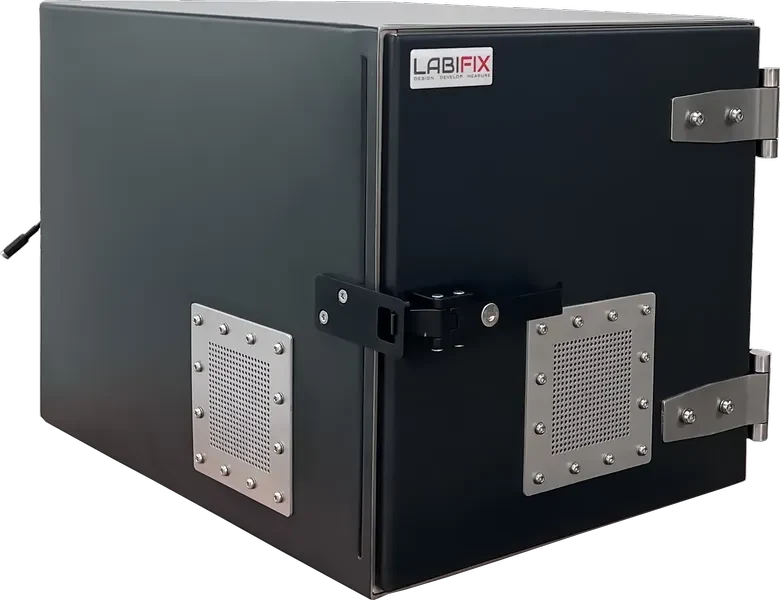
Match the enclosure to bench space, device loading and everyday laboratory access.
Explore this range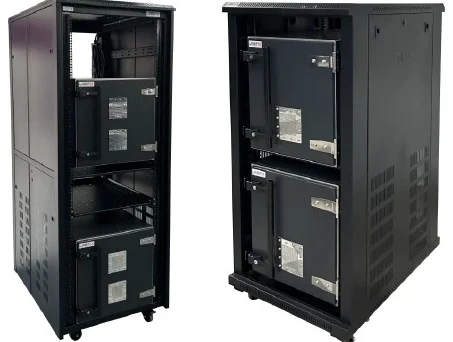
Plan rack mounting, cable routing and integration with your test instruments.
Explore this range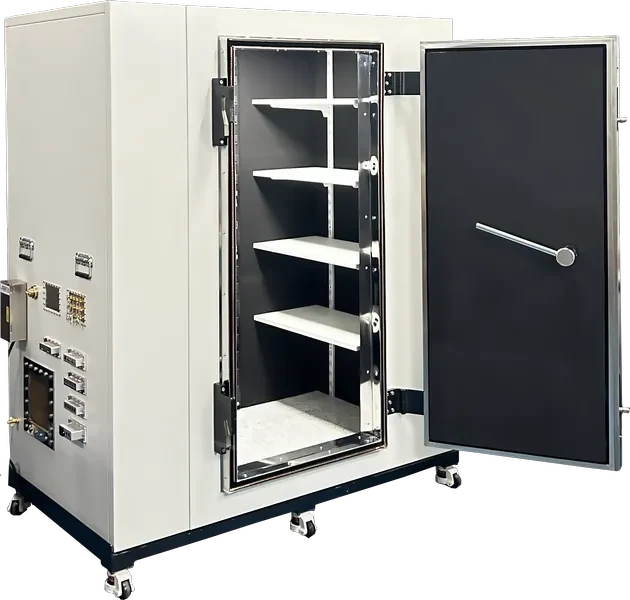
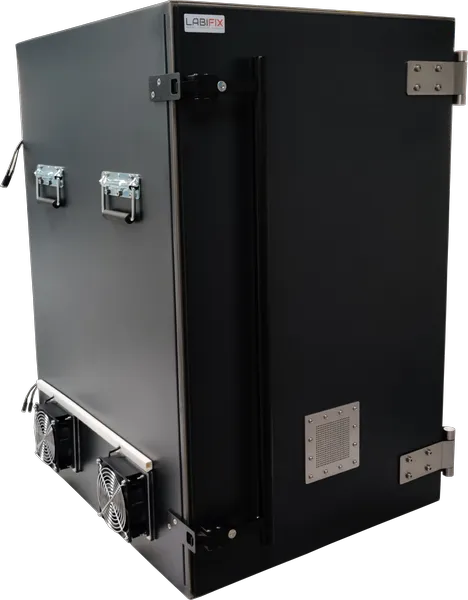
Allow room for larger devices, fixtures, access and ventilation requirements.
Explore this range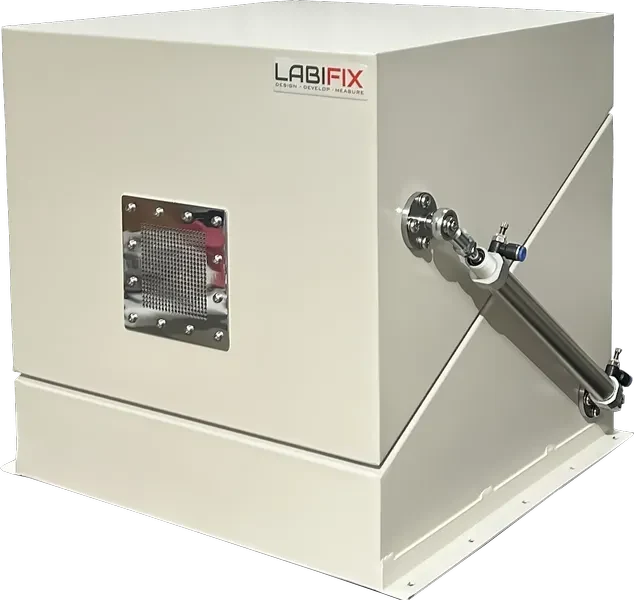
Discuss automated opening and closing, production integration and loading requirements.
Explore this rangeStart with internal working space and the published shielding specifications. Follow each model for its detailed configuration, or ask engineering to review the complete test setup.
Dimensions: height × width × depth, in inches. Confirm working clearances and the required interfaces before ordering.
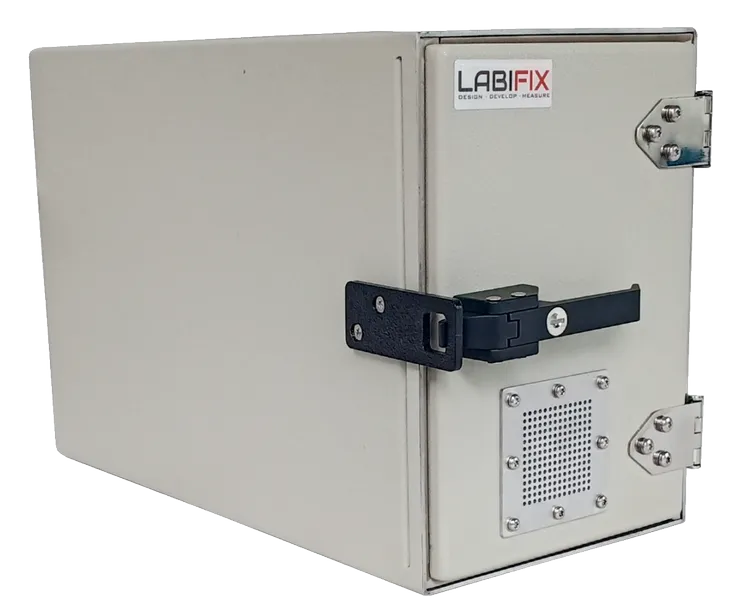
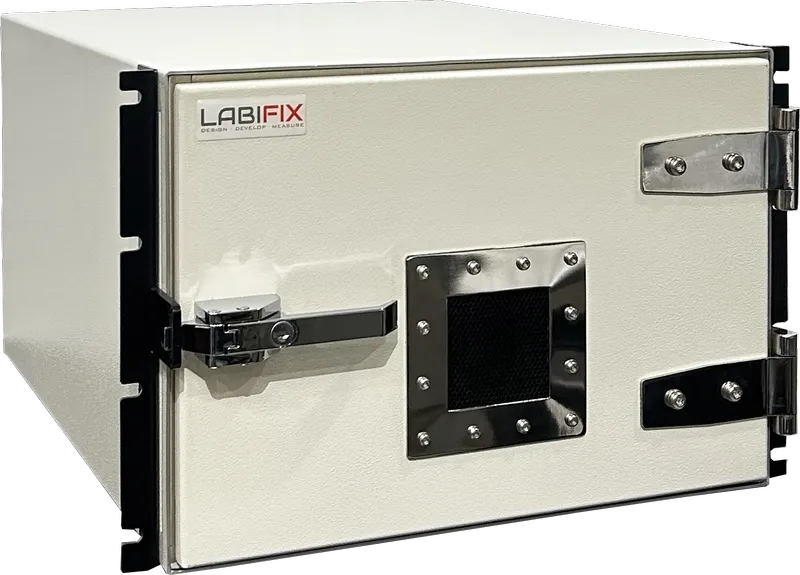
Specify the operating frequencies and required shielding effectiveness. Review isolation at those frequencies and in the intended enclosure configuration.
Include the device, fixture, antennas and connected cables. Allow for absorber lining and clearance to load, connect and operate the device.
List RF, data and power connections. Discuss connector types, filtered feedthroughs and cable routing as part of the complete RF test enclosure.
Choose manual or pneumatic operation around your workflow. Consider mounting, loading frequency, device heat and ventilation requirements.
Select the enclosure and interface configuration around the device, instrumentation and test method.
Work with LabiFix's engineering team in India to define enclosure dimensions, filtered interfaces and mounting. Review the relevant model specifications and available shielding-effectiveness evidence for your application.
About LabiFix manufacturingAn RF shield box reduces unwanted radio-frequency coupling between the device under test and its surroundings. It forms part of a controlled test setup for wireless devices and modules; the required isolation depends on the measurements.
Start with device dimensions, operating frequencies, required isolation and the RF, data and power connections. Then check mounting, loading, fixtures and thermal requirements against the model specifications.
LabiFix offers configurable RF shielding solutions. Share the required working space, connector types, mounting and access requirements with engineering to confirm a model or custom configuration.
Consider the external RF environment, test signal levels and interference your measurement can tolerate. Specify isolation at the relevant frequencies and review model-specific evidence with engineering.
Yes, when its frequency coverage, isolation, interfaces and internal arrangement meet the particular test requirements. Confirm suitability for the device and measurement method before ordering.
RF shielding reduces coupling with the surroundings; anechoic treatment reduces internal reflections. A shield box with absorber lining does not automatically meet the requirements of every anechoic or antenna measurement.
Enclosure dimensions, operating frequencies, isolation requirements, interfaces, door operation and quantity affect the quotation. Send your test requirements for a configuration-specific price and delivery discussion.
Share your device and test requirements. Our engineering team can help you evaluate enclosure formats, working space and interface options.