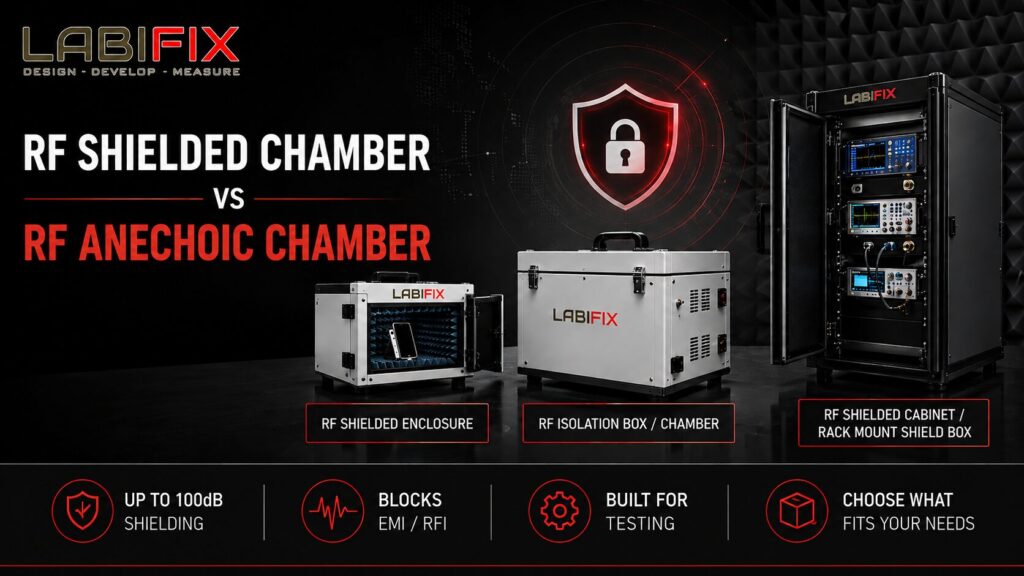
RF Shielded Chamber vs RF Anechoic Chamber: Which Do You Actually Need?
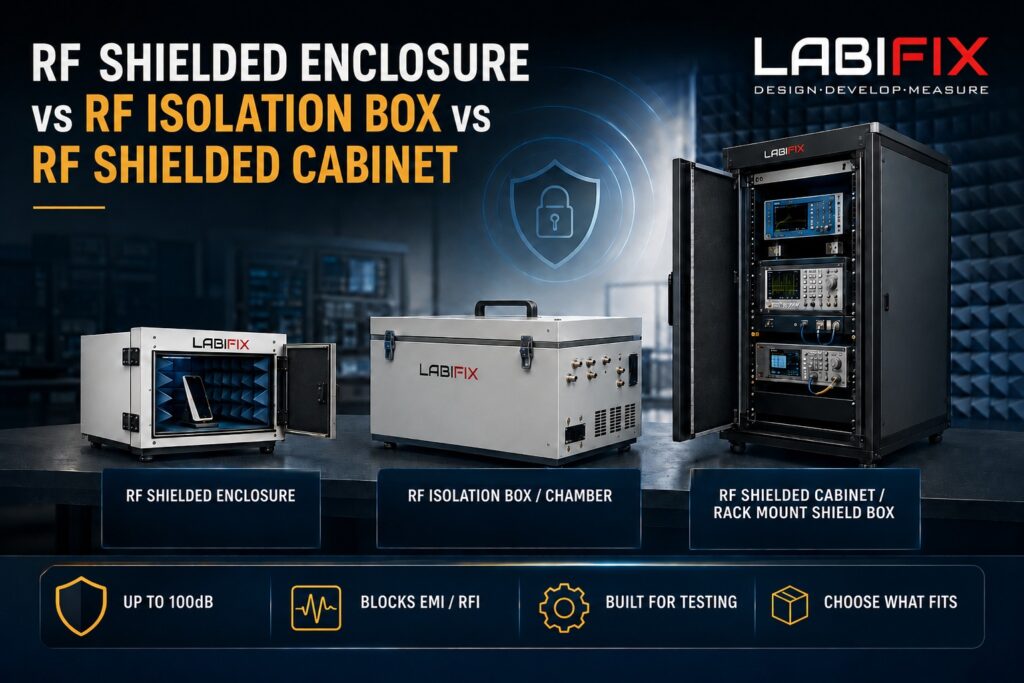
An RF Shielded Chamber blocks external electromagnetic interference using a continuous metal enclosure, but it does not automatically control reflections inside the chamber. An RF Anechoic Chamber combines electromagnetic shielding with RF absorber materials to reduce internal reflections and create a more controlled testing environment.
If you are performing conducted testing or need an interference-free environment for wireless device development, an RF shielded chamber may be sufficient. For radiated emissions, antenna measurements, OTA testing, or advanced EMC testing, an anechoic chamber may be more appropriate.
This guide explains the difference between these chamber types, where a Semi-Anechoic Chamber fits in, and how to choose the right solution for your testing requirements.
What Is an RF Shielded Chamber?
An RF Shielded Chamber is a Faraday-cage enclosure designed to prevent unwanted electromagnetic signals from entering or leaving the test environment. Conductive shielding, RF gaskets, filtered feedthroughs, and shielded ventilation systems help create a controlled testing space.
However, shielding alone does not necessarily eliminate internal RF reflections. Signals can reflect from conductive surfaces inside the chamber, potentially creating multipath effects and standing waves.
RF shielded chambers are commonly used for wireless device development, R&D, quality assurance, conducted testing, and applications where isolation from external RF interference is the primary requirement.
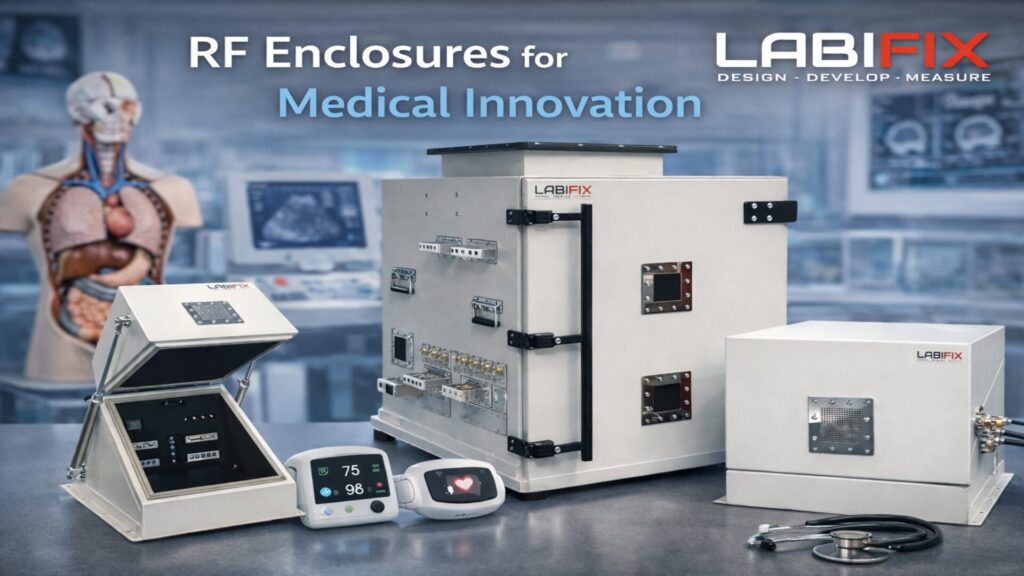
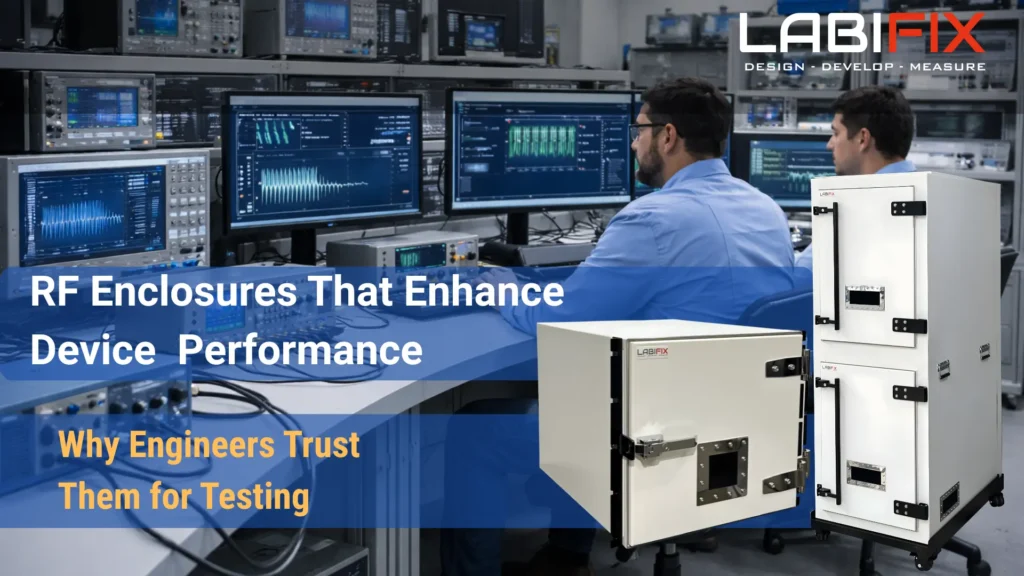
LabiFix provides RF Shielded Chambers designed for wireless testing, OTA applications, antenna measurements, and other RF testing requirements.
What Makes an RF Anechoic Chamber Different?
An RF Anechoic Chamber combines electromagnetic shielding with RF absorbing materials. These absorbers reduce reflected RF energy inside the chamber and help create an environment that more closely resembles free-space conditions.
Depending on the design, an anechoic chamber can use absorbers on the walls, ceiling, and floor. A Semi-Anechoic Chamber, on the other hand, generally retains a conductive ground plane while using absorbers on the walls and ceiling.
RF absorber materials, including Pyramidal RF Absorbers, are particularly important when accurate radiated measurements are required. They help reduce unwanted reflections that could otherwise influence test results.
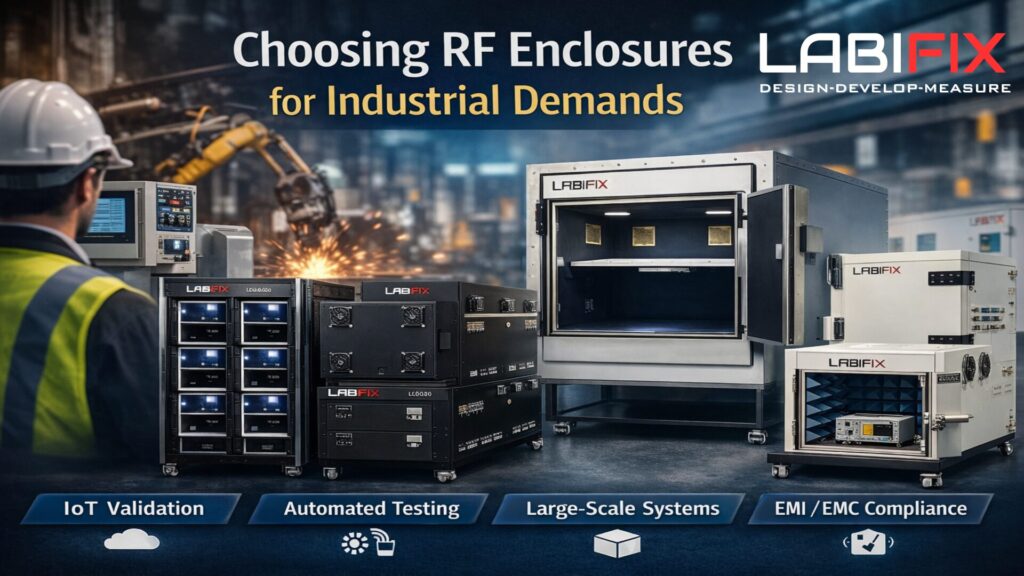
LabiFix also provides Shielded Anechoic Chambers for applications including antenna measurements, wireless device evaluation, IoT testing, and EMI/EMC testing.
RF Shielded Chamber vs Semi-Anechoic vs Fully Anechoic
| Chamber Type | Blocks External Interference | Controls Internal Reflections | Typical Applications |
|---|---|---|---|
| RF Shielded Chamber | Yes | Limited | Wireless device testing, R&D, conducted testing |
| Semi-Anechoic Chamber | Yes | Walls and ceiling | EMC testing and radiated emissions testing |
| Fully Anechoic Chamber | Yes | All major surfaces | OTA testing, antenna measurements, advanced radiated testing |
The most suitable chamber depends on the type of measurement, frequency range, device size, required test accuracy, and applicable testing standards.
Which Chamber Do You Actually Need?
The right chamber depends on what you are trying to measure.
For Conducted Testing and General RF Isolation
If your main requirement is Conducted Emissions Testing, conducted susceptibility testing, or general wireless device development, an RF shielded chamber can provide the controlled environment you need.
In these applications, the primary requirement is often to isolate the device from external RF interference rather than create a completely reflection-free environment.
For EMC Compliance Testing
If you need EMC Compliance Testing involving radiated emissions or radiated immunity, a more controlled chamber environment is generally required.
A Semi-Anechoic Chamber uses RF absorber materials on the walls and ceiling while maintaining a conductive ground plane. This configuration is widely used for radiated EMC measurements.
The exact chamber requirements should always be determined according to the applicable testing standard, measurement method, frequency range, and laboratory requirements.
For OTA and Antenna Testing
For OTA Testing Chamber applications, antenna measurements, wireless performance evaluation, and advanced RF testing, controlling internal reflections becomes increasingly important.
A fully anechoic or appropriately designed shielded anechoic chamber can provide a low-reflection environment for more accurate wireless measurements.
LabiFix's RF Shielded Chamber solutions can be configured for different testing requirements, including larger devices, antenna measurements, wireless systems, and OTA applications.
Why RF Absorber Matters
Shielding and absorption perform two different functions.
The shielding structure helps prevent unwanted electromagnetic signals from entering or escaping the chamber. RF Absorber material helps reduce reflections generated inside the test environment.
Pyramidal RF Absorbers are commonly used because their geometry helps absorb RF energy across the intended frequency range.
The absorber configuration should be selected according to the required frequency range and testing application. A chamber designed for one frequency range may require a different absorber configuration from a chamber intended for higher-frequency wireless or OTA testing.
RF Shielded Chamber vs RF Anechoic Chamber: Key Difference
The simplest way to understand the difference is:
RF Shielded Chamber = isolation from external RF interference.
RF Anechoic Chamber = isolation plus control of internal RF reflections.
An RF shielded chamber can be suitable when external interference is the main concern. An anechoic chamber becomes more valuable when reflected RF energy could affect the accuracy or repeatability of radiated measurements.
Therefore, an anechoic chamber is not automatically the better choice for every application. The chamber should be selected based on the measurement requirements.
How to Choose the Right RF Chamber
- The type of testing being performed
- Required frequency range
- Conducted or radiated measurements
- OTA testing requirements
- Required shielding effectiveness
- Required absorber performance
- Device-under-test dimensions
- Required I/O, RF and power connections
- Applicable EMC or wireless testing standards
- Available laboratory space and budget
Choosing the chamber based on these requirements can help prevent unnecessary costs while ensuring the testing environment is suitable for the intended application.
Final Thoughts
An RF Shielded Chamber and an RF Anechoic Chamber serve related but different purposes.
An RF shielded chamber primarily provides isolation from external electromagnetic interference, while an RF anechoic chamber adds RF absorber materials to reduce internal reflections.
A Semi-Anechoic Chamber provides another option when a controlled ground plane is required alongside absorber-lined walls and ceiling.
The best solution depends on whether you are performing conducted testing, radiated emissions testing, EMC compliance testing, OTA testing, or antenna measurements.
If you are unsure which chamber configuration is appropriate, LabiFix can help evaluate the testing requirements and identify a suitable RF shielding solution.
Contact LabiFix to discuss your RF chamber requirements.