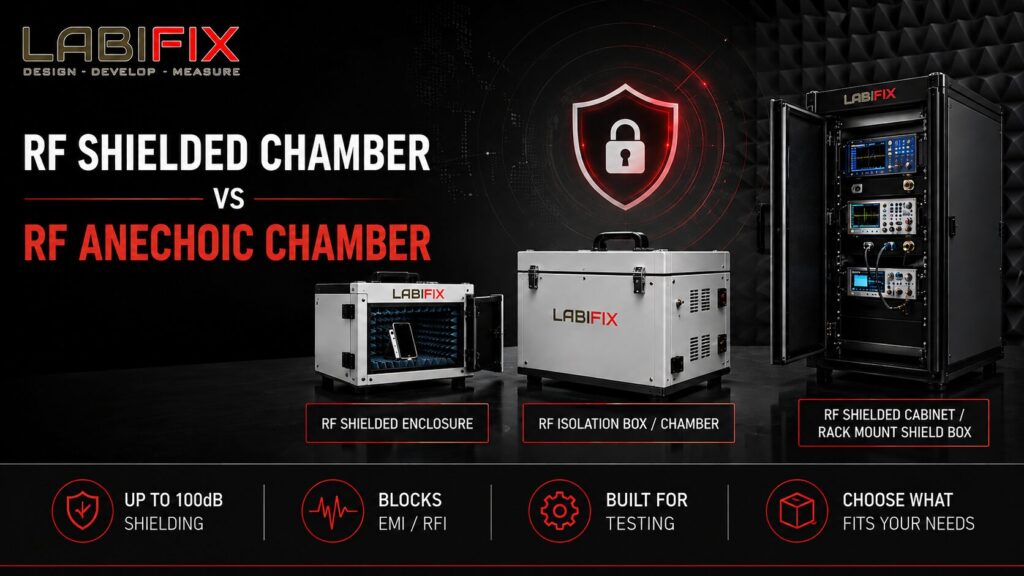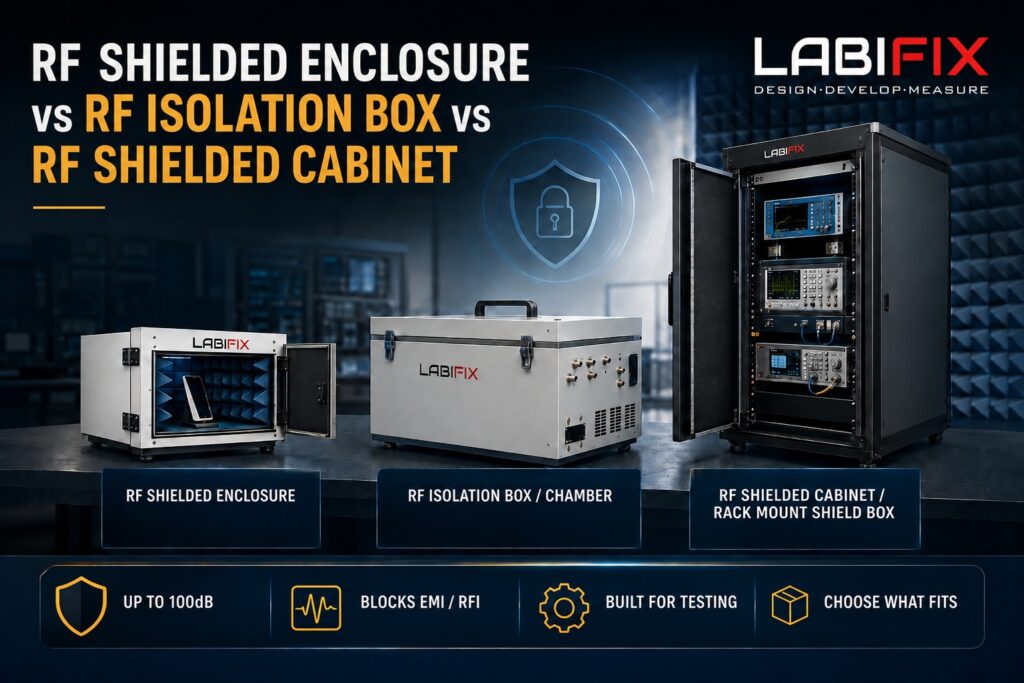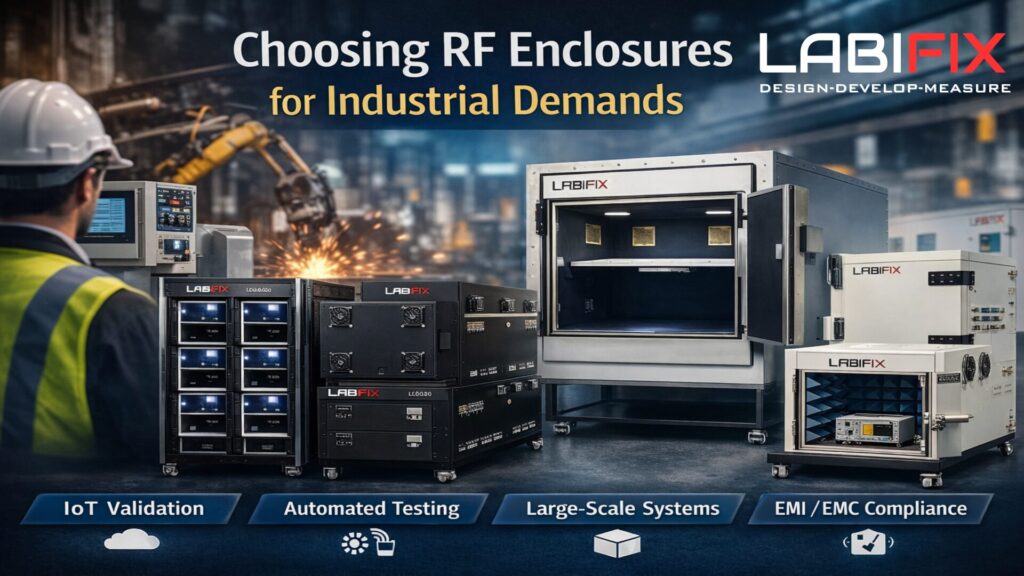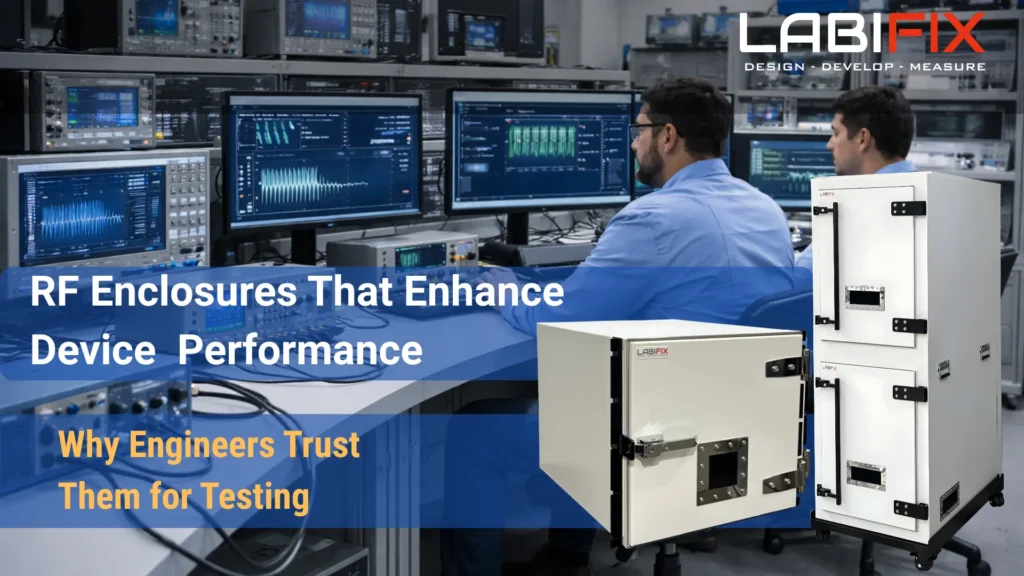
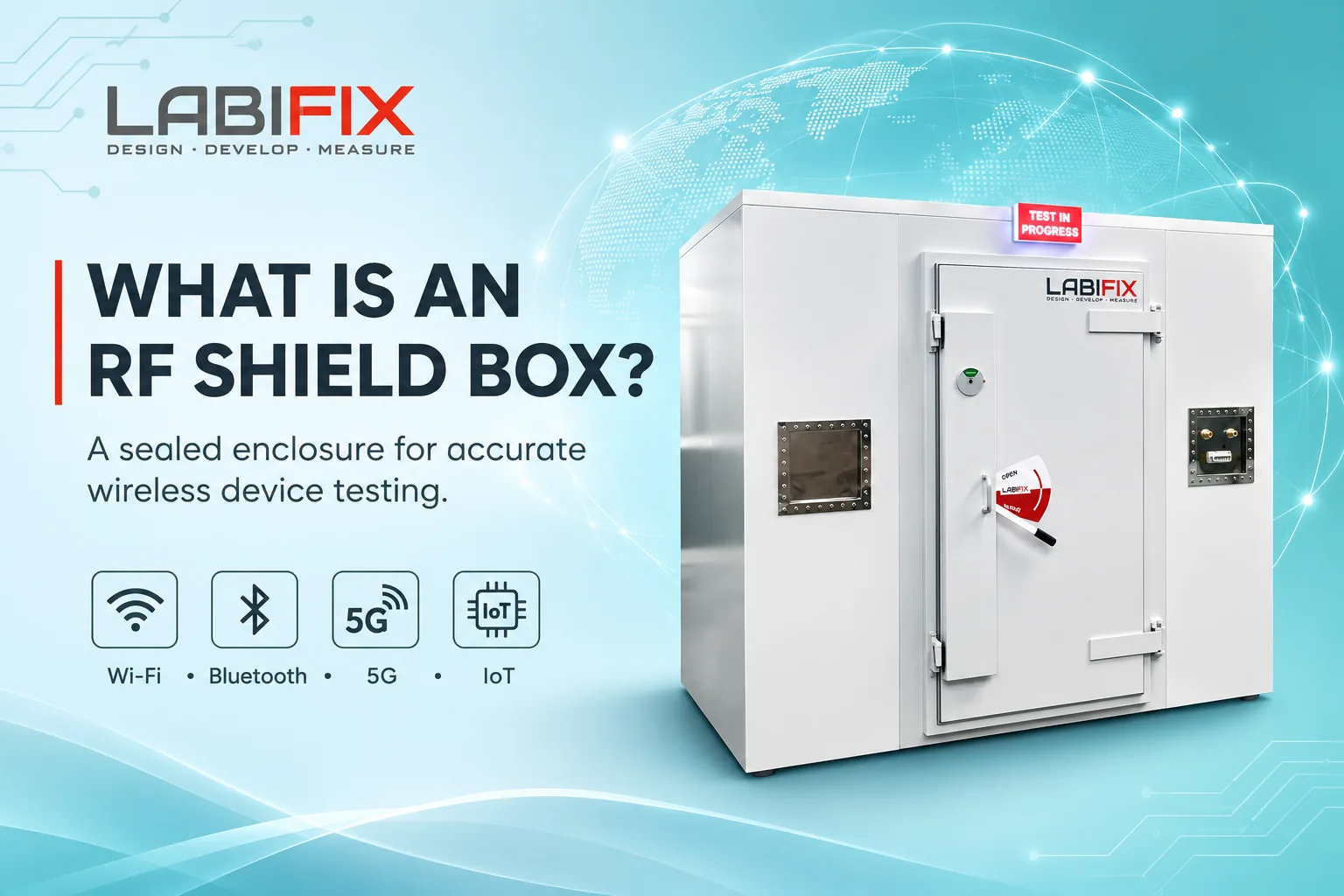
What is an RF shield box? It is a sealed metal enclosure that blocks outside radio-frequency signals from reaching a device under test, and stops the device's own signals from leaking out. Engineers use one to create a quiet, controlled RF environment on a lab bench or a production line, so that Wi-Fi, Bluetooth, cellular and IoT measurements reflect the device itself, not the crowded airwaves around it. This guide explains the RF shield box working principle, how shielding effectiveness is measured, where these enclosures are used, and how the main types compare.
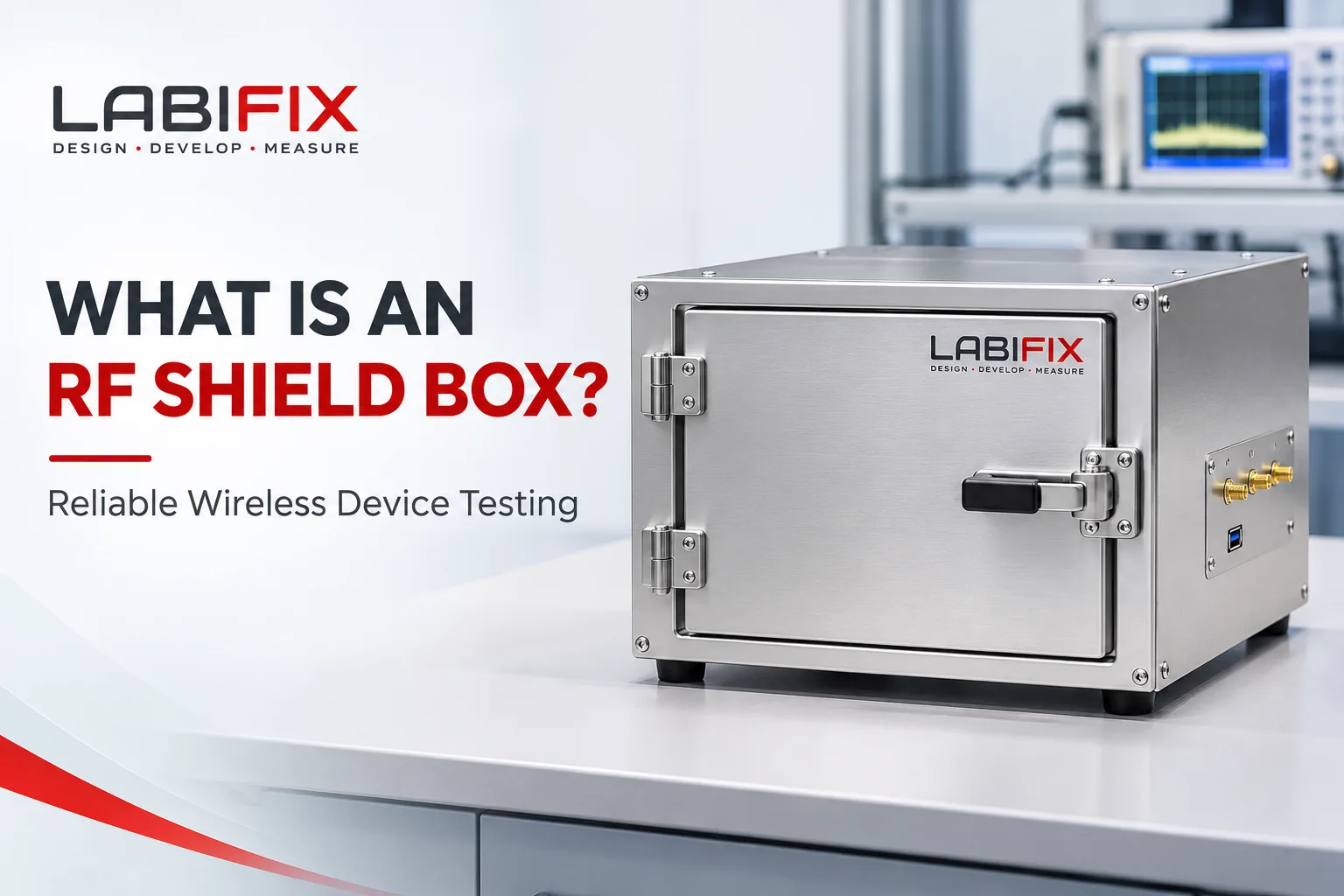
Why Do Wireless Devices Need an RF Shield Box?
A modern lab or factory floor is full of RF energy: office Wi-Fi, mobile networks, Bluetooth peripherals, and other devices being tested next to yours. If a phone, router or IoT module is measured in the open, that background noise can change sensitivity, throughput and connection results from one test to the next. Two units that are identical can appear to perform differently simply because of what else was transmitting nearby.
An RF shield box for wireless testing removes that variable. Inside the enclosure, the device only "hears" the signals the test system deliberately sends through cables or internal antennas. That makes results repeatable, comparable between stations, and trustworthy enough to pass or fail a product.
How Does an RF Shield Box Work?
The RF shield box working principle is the same idea behind a Faraday cage. A continuous conductive shell reflects and absorbs electromagnetic waves, so very little energy passes through the walls. In practice, a good shielded test enclosure depends on several details working together:
- Conductive body: a welded or tightly joined metal enclosure with no gaps that RF can slip through.
- RF door seal: conductive gaskets or finger-stock contacts around the lid or door, compressed evenly when it closes. The seal is usually the weakest point, so its design matters most.
- Filtered interface panel: cables for power, USB, Ethernet and RF have to enter the box. Filtered and RF connectors (such as SMA or N-type) let wanted signals pass while blocking unwanted noise.
- RF absorber lining: foam absorbers inside reduce internal reflections, so the device is not measuring echoes of its own signal.
What Is Shielding Effectiveness?
Shielding effectiveness, often called isolation, is how much an enclosure weakens an RF signal passing through it, measured in decibels (dB). The scale is logarithmic: every 10 dB means a further tenfold reduction in power. So 60 dB reduces signal power by a factor of one million, and 90 dB by a factor of one billion.
That is why the isolation figure is the first number engineers check. LabiFix RF shielded enclosures are specified for high isolation of more than 90 dB, which is enough for sensitive receiver and RF isolation testing in busy environments. Isolation should always be checked across the full frequency range you plan to test, because performance can vary by band.
Where Are RF Shield Boxes Used?
- Wi-Fi and Bluetooth: throughput, range and connection testing for routers, mesh systems, earbuds and wearables, including Wi-Fi 6E and Wi-Fi 7 products.
- LTE and 5G: handset, module and modem testing across sub-6 GHz bands, with specialised enclosures for 5G mmWave.
- IoT: sensors, trackers, smart meters and modules that must work reliably at low signal levels.
- Automotive: connected-vehicle and ADAS electronics validated without outside interference.
- EMI/EMC pre-compliance: early checks before a product goes to a certification lab.
You can see the full range of use cases on our wireless device testing page.
What Are the Main Types of RF Shield Box?
The right RF shielded enclosure depends on device size, test volume, and where the box will sit.
RF Shield Box Types at a Glance
| Type | Best for | Door / access | Typical setting |
|---|---|---|---|
| Benchtop shielded enclosure | Precision R&D and lab validation | Manual lid or door | Engineering bench |
| Rack mount RF shield box | Integration into automated test systems | Manual or drawer | Standard 19" and 24" racks |
| Pneumatic RF shield box | High-volume production and QA | Air-operated, automated | Production line |
| Portable RF shield box | Field testing and mobile labs | Manual | Lab to field |
| Standalone shielded enclosure | Larger devices and full assemblies | Manual door | Lab floor |
For integrated test systems, a rack mount RF shield box keeps everything in one cabinet. For field engineers, a portable RF shield box brings controlled conditions wherever the device is. Browse every option on our all products page.
What Should You Check Before Buying One?
- Isolation (dB) across your test frequency range
- Internal size relative to the device and any fixtures
- Number and type of filtered connectors and RF ports
- Door mechanism: manual for R&D, pneumatic for production
- Absorber lining for over-the-air measurements
- Quality and compliance credentials
LabiFix manufactures in Bengaluru under ISO 9001:2015, with products that meet CE RED 2014/53/EU, and has supplied more than 5,000 boxes to customers in over 15 countries.
Foire Aux Questions
Final Thoughts
An RF shield box is the foundation of reliable wireless testing. It turns an unpredictable RF environment into a controlled one, so every result means something. Choosing the right type comes down to isolation, size, connectors and test volume.
Need the right enclosure for your devices? Request a quote from the LabiFix engineering team.